
2026.11.20 News
Guest Article: Mauritius as a Base for Japanese Companies
We are pleased to publish, with the authors' permission, the following article by Arlshaad Goolamally (Legal A), with Bertrand Betsy (LEGIS & Partners Ltd). Nov 19, 2026.
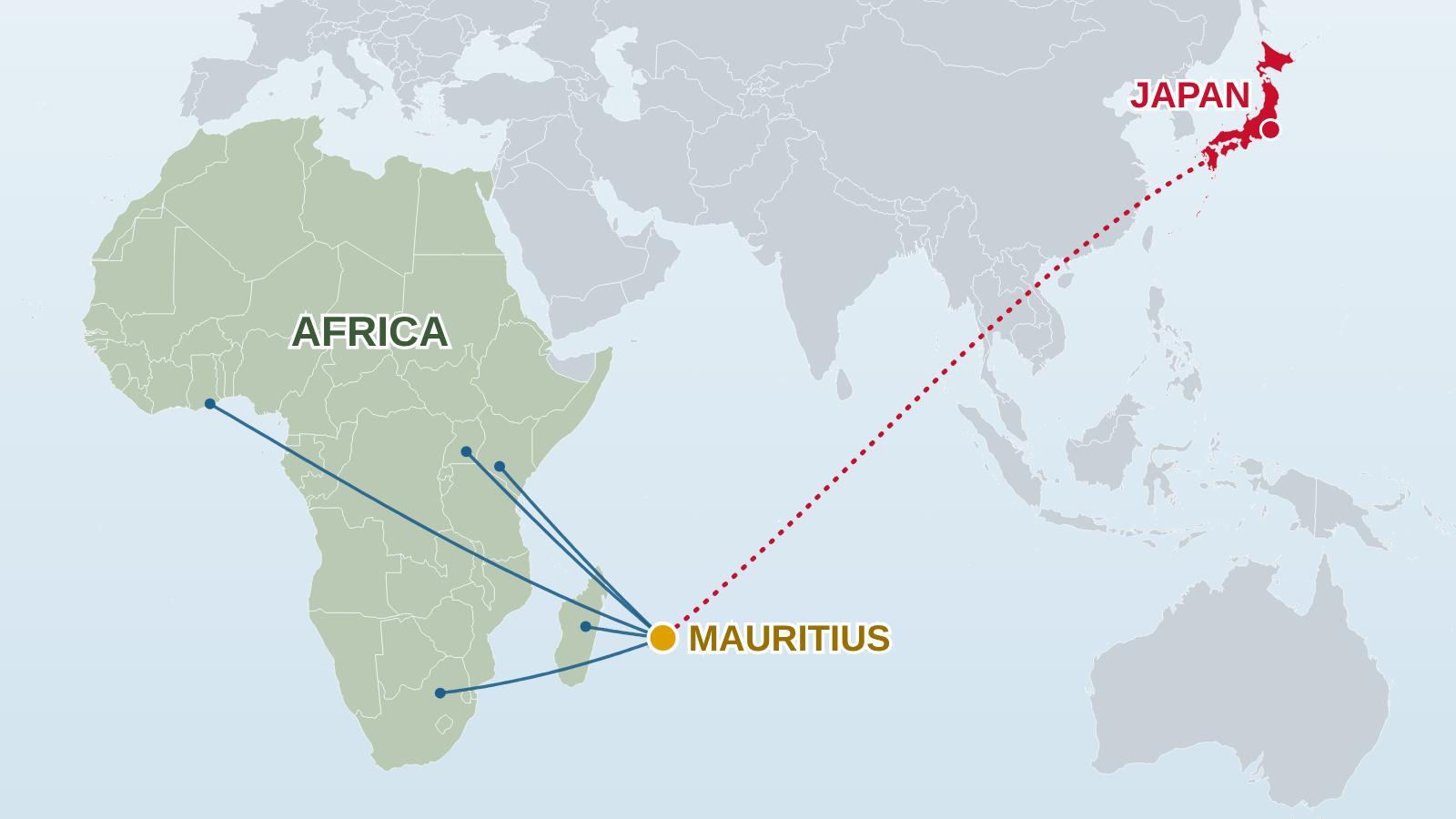
Mauritius sits between Asia and Africa: a base for Japanese investment into the African continent.
For a Japanese company looking beyond Asia, a Mauritian company can serve as a regional holding, trading or investment base, with access to African markets and a stable, English-speaking legal system.
Mauritius is a small island state in the Indian Ocean, around 2,000 km east of the African mainland. Its international financial centre is regulated by the Financial Services Commission (FSC), and its legal system that combines French civil law for substantive matters and English common law for procedure. English is the language of legislation and business, and the Stock Exchange of Mauritius trades in several currencies, including the US dollar.
A Japanese company has two main Mauritian vehicles to choose from, and the choice decides both the licence it needs and how it is taxed.
Domestic company or Global Business Company
The choice depends on where the business will be carried on. Both are incorporated under the Companies Act 2001.
| Domestic company | Global Business Company (GBC) | |
|---|---|---|
| Typical use | Business in Mauritius: local operations, a regional office serving the Mauritian market | Business principally outside Mauritius: holding, investment, trading or services into other countries |
| Licence | Business registration only, plus any sector licence | Global Business Licence from the FSC |
| Ownership | No restriction | Majority held or controlled by non-citizens of Mauritius |
| Substance | No specific test | Core income-generating activities carried out in or from Mauritius, with qualified staff and proportionate expenditure; managed and controlled from Mauritius |
Under section 71 of the Financial Services Act 2007, a resident company that is majority held or controlled by non-citizens and conducts business principally outside Mauritius must apply for a Global Business Licence. In practice, a Japanese group using Mauritius to invest or trade into Africa will usually need a GBC. A GBC must be administered through a licensed management company in Mauritius and must meet the substance test on an ongoing basis.
Tax framework
Mauritius taxes companies at a headline rate of 15%, and a qualifying company can reduce the effective rate on certain foreign income to as low as 3%.
Under the Income Tax Act, 80% of foreign-source dividends and 80% of interest derived by a company are exempt, provided the company meets the prescribed substance conditions. For dividends, the payment must also not have been deducted in the source country. Tax at 15% on the remaining 20% gives an effective rate of 3% on that income.
Dividends are not on the list of payments subject to withholding tax in section 111B of the Income Tax Act, so a Mauritian company can pay dividends to a foreign parent without Mauritian withholding tax. Interest and royalties paid to non-residents can be taxed at source, at the domestic rate or a lower treaty rate. Companies with turnover above Rs 50 million also pay the Corporate Climate Responsibility levy of 2% of chargeable income.
A GBC that cannot show staff, expenditure and management in Mauritius risks losing both the partial exemption and treaty access.
Gateway to Africa
Mauritius has concluded 45 tax treaties, and 16 of those in force are with African countries.
The Mauritius Revenue Authority lists treaties in force with Botswana, Cabo Verde, the Republic of Congo, Egypt, Eswatini, Ghana, Lesotho, Madagascar, Mozambique, Namibia, Rwanda, Seychelles, South Africa, Tunisia, Uganda and Zimbabwe. These can reduce withholding tax on dividends, interest and royalties paid from those countries to a Mauritian company.
Mauritius is also a member of SADC, COMESA and the African Continental Free Trade Area (AfCFTA), and has investment promotion and protection agreements with several African states.
A typical structure is a Japanese parent holding a Mauritian GBC, which in turn holds subsidiaries or investments in one or more African countries. Each treaty has its own conditions, including anti-abuse rules, so the structure must be reviewed country by country.
Japan and Mauritius: the treaty position
There is currently no bilateral double taxation agreement between Japan and Mauritius.
- Japan's Ministry of Finance lists Mauritius among the African jurisdictions with no bilateral convention or agreement with Japan (list as of 1 July 2026).
- The Mauritius Revenue Authority does not list Japan among treaties in force, awaiting ratification or under negotiation.
- In August 2025, around TICAD 9 in Yokohama, the Mauritian Prime Minister announced that Japan had agreed to the signing of an Investment Promotion and Protection Agreement, and both sides described a tax treaty as a possible next step.
For now, a Japanese parent cannot rely on a treaty for dividends or other income received from Mauritius. Japanese tax rules, including the controlled foreign company rules, must be reviewed alongside the Mauritian position before any structure is set up.
Listing in Mauritius: the DEM
A growing company can also raise capital in Mauritius through the Development & Enterprise Market (DEM), the Stock Exchange of Mauritius's market for growth companies. Under the DEM Rules, an applicant needs one year of IFRS accounts audited without qualification, a market capitalisation of at least Rs 20 million, and at least 100 shareholders with 10% held by the public. A company without a track record may instead apply with a three-year business plan certified by an accredited independent financial adviser.
The rules apply equally to companies incorporated overseas, so a Japanese company can apply directly or list through a Mauritian holding company. Every DEM company must retain a corporate adviser at all times, publish quarterly IFRS accounts within 45 days, and disclose price-sensitive information promptly.
Practical points
A Mauritian structure works best when it has a real business purpose and is set up with both Mauritian and Japanese advice.
- Define the purpose: holding African investments, regional trading, or a services hub.
- Choose the vehicle: a domestic company for business in Mauritius, a GBC for business principally outside it.
- Plan substance from the start: at least two Mauritius-resident directors, a principal bank account, accounting records and audit in Mauritius, and staff and spending proportionate to the activity.
- Check each African treaty and the Japanese tax position before investing.
Mauritius offers Japanese companies a regulated base for Africa: an FSC-supervised holding vehicle, a 3% effective rate on qualifying foreign income and 16 African tax treaties in force. The main gap is the lack of a tax treaty with Japan, which both sides have described as a next step.
About the authors

Arlshaad Goolamally is a barrister and the founder of Legal A, Port Louis. He was previously Head of Legal of a company listed on the Development & Enterprise Market of the Stock Exchange of Mauritius.

Bertrand Betsy is a Partner at LEGIS & Partners Ltd, Port Louis.
Contact
Arlshaad Goolamally, Legal A
Email: arshaadgoolamally@icloud.com
Tel: 00230 5253 2129
Address: Port-Louis
Bertrand Betsy, Partner, LEGIS & Partners Ltd
Email: betsy@legis.mu
Tel: 00230 210 6100
Address: 1st Floor, Block B, EDITH, 6 Edith Cavell Street, Port Louis 11302, Mauritius
Website: www.legis.mu
Sources: Mauritius Revenue Authority: Double Taxation Avoidance Agreements; Ministry of Finance Japan: list of tax conventions (as of 1 July 2026); Intercontinental Trust: A New Chapter in Mauritius–Japan Relations (27 August 2025); Mauritius IFC: African Continental Free Trade Area; Financial Services Act 2007, s.71; Income Tax Act 1995, s.111B and Second Schedule (partial exemption), Sub-Part AE (CCR levy); Companies Act 2001.
This article is general information on Mauritian law as at November 2026 and is not legal or tax advice. It does not address Japanese law.